


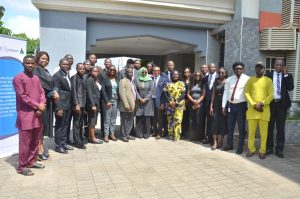
Benin City, Nigeria — October 17, 2025
In a renewed push to strengthen the legal profession’s role in combating money laundering and illicit financial flows, the African Center for Governance, Asset Recovery and Sustainable Development has trained representatives from branches of the Nigerian Bar Association (NBA) across Edo and Delta States in a One-Day Training of Trainers (ToT) Workshop held in Benin City on Thursday, October 16, 2025.
The workshop, organized as part of the African Center’s FCDO-supported project titled “Tackling Illicit Financial Flows through Asset Recovery, Management, and Strengthening ML/CFT/PF Compliance in Nigeria,” aimed to build the capacity of lawyers as frontline gatekeepers in the fight against financial crimes. It also sought to equip selected branch representatives to serve as in-house trainers, cascading knowledge and compliance practices within their local NBA branches.
The session opened with remarks by Mrs. Obialunanma Nnaobi-Ayodele, Deputy Project Director of the African Center, who delivered the agenda-setting presentation. She underscored the growing risks of money laundering within the legal profession and the urgent need for lawyers to safeguard their practices from criminal misuse.

Nnaobi-Ayodele explained that the workshop was designed to achieve four core objectives: building the capacity of NBA branches and compliance officers; equipping in-house trainers to cascade knowledge within their branches; improving compliance with national and international AML/CFT standards; and safeguarding law firms from misuse by illicit actors.
She commended the UK Foreign, Commonwealth and Development Office (FCDO) for its continued support, and Africa Network for Environment and Economic Justice (ANEEJ) for its partnership in advancing financial transparency and governance reforms.
Delivering the keynote address, the President of the Nigerian Bar Association, Mazi Afam Osigwe, SAN, represented by Chief Olayiwola Afolabi, SAN, reaffirmed the NBA’s commitment to strengthening the legal profession’s compliance culture. He emphasized that lawyers occupy a strategic position within Nigeria’s financial and governance architecture and must not allow the legal profession to be exploited as a conduit for money laundering or terrorism financing.
“Our duty is clear — we must ensure that the legal profession is never weaponized against the integrity of Nigeria’s financial system,” Osigwe declared. “The NBA-AML Portal is not just a technical tool, but a symbol of our collective commitment to transparency, accountability, and ethical practice.”
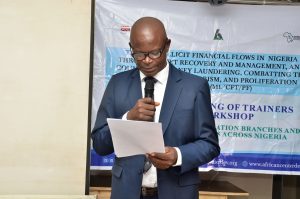
He commended the African Center for its credible partnership and technical leadership, noting that the collaboration with the NBA Anti-Money Laundering Committee led to the development of the NBA-AML Portal, a first-of-its-kind self-regulatory mechanism for the legal profession in Nigeria. He also urged lawyers to serve as change agents within their branches, promoting ethical standards that would help Nigeria exit the FATF grey list and restore investor confidence in the country’s financial system.
The Executive Director of the Africa Network for Environment and Economic Justice (ANEEJ), Reverend David Ugolor, in his goodwill message, commended the collaboration between ANEEJ and the African Center in implementing the FCDO-funded project aimed at strengthening anti-money laundering compliance and asset recovery mechanisms in Nigeria.
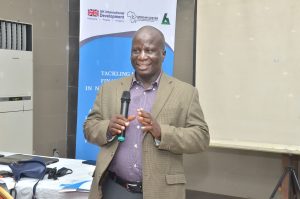
He emphasized that lawyers occupy a strategic position in the fight against illicit financial flows, describing them as “critical enablers of integrity and accountability” in both public and private transactions. According to him, effective compliance within the legal profession is indispensable to Nigeria’s broader anti-corruption and financial transparency agenda.
The technical sessions featured presentations by Dr. Maryam Idris Abdulkadir, Assistant Secretary of the NBA-AML Committee; Chris Ugwuala, Esq.; Moira Frank-Peterside, Esq.; and Tijani Dauda of the African Center. Topics covered include the global and regional AML/CFT regimes, the Rules of Professional Conduct, reporting obligations such as Suspicious Activity and Transaction Reports (SAR/STR), and the effective application of Know Your Customer (KYC) and risk-based approaches. Facilitators guided participants through practical case scenarios, risk assessment tools, and reporting mechanisms, aligning Nigeria’s compliance obligations with Financial Action Task Force (FATF) recommendations and GIABA standards.
In a practical demonstration, Tijani Dauda led participants through the NBA-AML Portal, showing how the digital platform supports compliance monitoring and reporting. Participants engaged in interactive exercises and discussions on improving branch-level adherence and promoting a compliance culture.
Representatives from NBA branches in Benin, Auchi, Ekpoma, Asaba, Warri, Effurun, Ughelli, Sapele, Oleh, Agbor, and Udu described the workshop as both “timely” and “eye-opening.” Participants from the NBA Asaba, Ugheli, and Uromi branches and FIDA representative noted that the training “deepened understanding of obligations under the AML regime” and “provided them with the tools and confidence to train colleagues within their respective branches.”
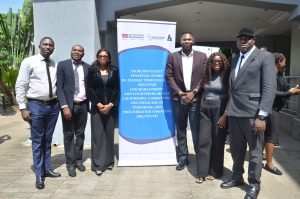
The Benin ToT workshop forms part of a nationwide series of capacity-building sessions targeting legal practitioners across Nigeria. The initiative reinforces the broader objectives of the FCDO-supported project — to tackle illicit financial flows, improve asset recovery and management, and strengthen national compliance with international anti-money laundering and counter-terrorism financing standards.
As the African Center continues its engagement with professional bodies and institutions, it reaffirms its commitment to promoting transparent governance, accountability, and sustainable development across Africa.
