


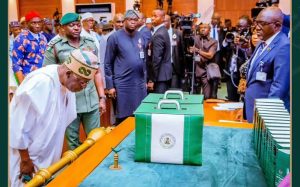
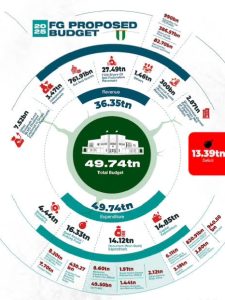
The federal government of Nigeria proposed N49, 740,165,355 trillion for 2025 budget which is 41.9% increase from the previous year. This year budget is tag the restoration budget: Securing peace, rebuilding prosperity. The 2025 federal government of Nigeria proposed budget is with a revenue forecast of N35 trillion resulting in a deficit exceeding N13 trillion or 4% of GDP. This means that the federal government plans to secure over 13 trillion in new borrowing including N9 billion in direct borrowings and N4 trillion in project specific loans. President Bola Tinubu’s proposed 2025 budget allocates 5.18% (N2.48 trillion) to health, which again falls short of the 15% target agreed for countries during the Africa Union 2001 Abuja declaration. In 2024 health sector budget was 4.4% (N1.2 trillion) of the entire budget of N27.5 trillion been allocated to health.
With President Donald Trump decision to withdraw the US from the World Health Organisation followed by the freezing of USAID’s activities which is more into funding the health sector, a new dawn to take health funding serious by both national and state government becomes the current reality if we are serious about protection of lives of Nigerians.
The Federal government of Nigeria seeing the dooming danger, in its Panic response to President Trump announcement of the cancellation of America aids for the treatment of HIV/AIDS in Nigeria up scaled with a paltry 5billion Naira. The major diseases in the primary health sector remain malaria, tuberculosis and HIV/AIDS treatment. Sadly Nigeria and many African countries are too dependent on US funding and other donor funding for basic health activities and intervention. According to US Embassy publication, since 2021, the US has committed to providing nearly US $20 billion in health programmes in Africa. The report says in 2023 alone, the US invested over US $ 600 million in health assistance in Nigeria. This is about 21% of Nigeria 2023 annual health budget. The US support includes the followings, preventing malaria, ending HIV and delivering vaccines such as (Covid-19, polio, retrovirus, IPV2 and HPV etc).
Nigeria has over the years allocated on the average about 5% of the national budget to health. Three quarter of that covers recurrent expenditures like salaries, overhead. It is important to note that more than 10% of the total budget be allocated to the health sector since the US has withdrawn their health support, also every kobo budgeted for in the health sector has to be maximally utilized and that the federal government should put a mechanism in place at the health department for public audit and accountability. Unless this is done, we can only continue to reflect and muse through what tomorrow holds for health sector survival and accountability in Nigeria.
Victor Idajili, writes from Socio Economic Research and Development Centre, SERDEC.
